The hidden cost of waiting for signatures
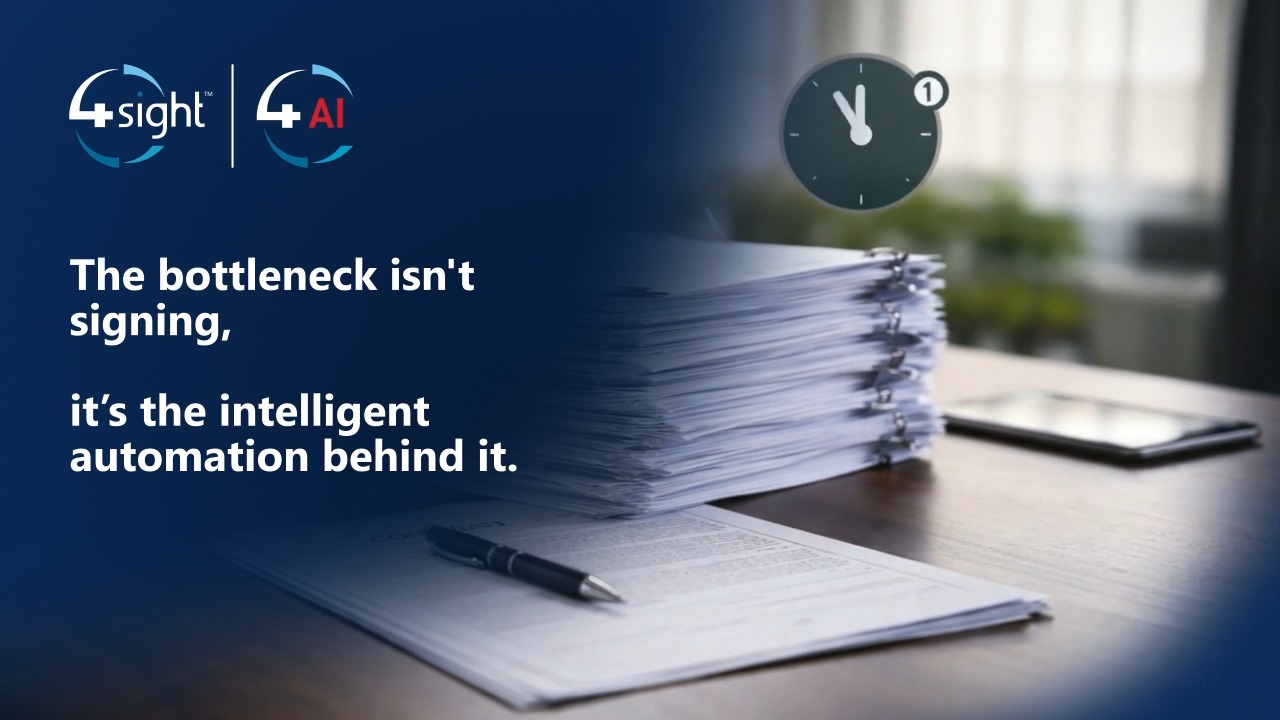
There's a phrase that gets said in businesses every single day, across every industry, at every level of seniority.
"We're just waiting for the signature."
It sounds harmless. Routine, even. But underneath that phrase is a pattern of delay, inefficiency, and lost value that most organisations have quietly accepted as normal, when it's anything but.
The signature isn't the problem. The wait is.
Most organisations already have some form of digital signing capability. The technology to put ink on a document without printing it has existed for years.
And yet, teams are still:
Chasing approvals that should have been automated
Re-sending documents that were never actioned
Building manual trackers to follow what's pending
Losing visibility the moment a document leaves their inbox
Discovering compliance gaps only when someone asks for an audit trail
The digital signature was never the bottleneck. The automation around it is.
What "waiting" actually costs
This is where it gets uncomfortable, because the cost isn't always visible on a balance sheet. It hides in the gaps between process steps.
Delayed revenue. An unsigned contract is money you've earned but haven't collected. Every day a sales agreement, supplier contract, or renewal sits pending is a day that cash flow is held hostage by admin. Across a quarter, that compounds.
Wasted capacity. Your highest-value people, your sales leads, ops managers, and legal teams, are spending real hours following up, re-sending, and manually tracking document status. That's not what they were hired to do. And it's not what they should be doing.
Compounding risk. Without a structured automation process, audit trails get murky. Documents go missing or expire unnoticed. Regulatory requirements become harder to demonstrate. In any governed environment, that's not an inconvenience. It's exposure.
Decision-making in the dark. When no one has real-time visibility into what's pending, where things are stuck, or how long approval cycles actually run, the business can't optimise what it can't see. Bottlenecks become normalised. They stop looking like problems and start looking like "just how things work here."
The mindset shift executives need to make
Here's the honest truth: most organisations treat digital signing as a feature. A convenience. A tick in the digital transformation box.
But document automation is not a feature. It's infrastructure.
Every approval, every contract, every agreement that requires a signature is a moment where the business either moves forward or stalls. Multiply that by the volume of documents flowing through your organisation on any given week, and the aggregate impact is significant.
The question is no longer "Do we have a signing tool?"
It's "Do we have an intelligent automation process around signing that actually works?"


What proper document automation looks like
This is where 4sign was built to do more than sign.
A purposeful platform connects the entire document journey, not just the moment of signature:
End-to-end intelligent automation from document creation through to secure, compliant storage
AI that reads every signed document, extracts what matters, and routes it to the right system automatically, so the data doesn't stay locked in a PDF
Live tracking and visibility so anyone can see exactly where a document is and who's holding up the process
Intelligent routing and reminders that remove the need for manual follow-ups altogether
Seamless integration with the CRM, ERP, and collaboration tools your teams already live in
Legally enforceable, audit-ready transactions built in from the start, not retrofitted later
The result isn't just faster signing. It's faster everything that depends on it.
The downstream impact on the business
When document automation runs properly, the effects don't stay isolated to one team or one process. They ripple outward.
Deal cycles shorten. Cash moves sooner. Operational noise drops. Compliance becomes a managed discipline rather than a reactive scramble.
And leadership finally has the visibility to make informed decisions about where the real bottlenecks live, instead of inheriting the consequences of a process nobody questioned.
None of this requires a massive transformation project. It requires treating document automation as something worth engineering properly.
The question to ask your team today
How many active deals, approvals, or operational decisions in your business are currently sitting at the same step, waiting for a signature?
If the answer is more than it should be, you already know where to start.
Ready to close the gap?
Connect with the 4Sight team at sales@4sight.cloud to explore how 4sign can remove the friction from your document automation and turn "waiting for signatures" into a phrase your team no longer needs to say.
